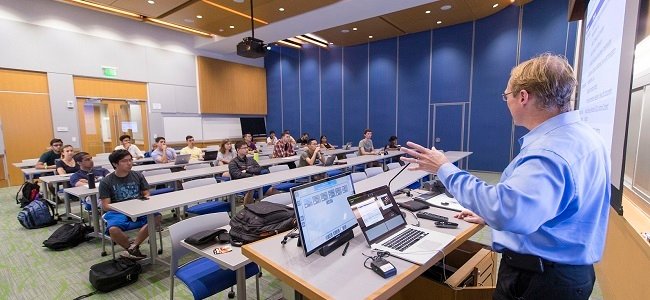
Higher education has always evolved alongside society’s technological progress, but the current era represents one of the most significant transformations in the history of universities. Technology is no longer a supporting tool in education; it has become a central force shaping how knowledge is created, delivered, and experienced. From digital classrooms and artificial intelligence to virtual laboratories and global online learning platforms, modern universities are being redefined by technological innovation.
In the past, university education was largely confined to physical spaces, where lectures, printed materials, and face-to-face discussions formed the foundation of learning. Today, this model has expanded into a more flexible, interconnected, and data-driven system. Students can now access lectures from anywhere in the world, collaborate with peers across continents, and engage with interactive learning environments that adapt to their individual needs. This shift has not only changed how education is delivered but also how it is understood.
One of the most visible changes in modern universities is the rise of digital learning platforms. Learning management systems have become essential tools for organizing course materials, assignments, assessments, and communication between students and faculty. These platforms provide a centralized space where learning is structured yet flexible. Students can revisit lecture recordings, access reading materials, and submit work at their own pace. This accessibility has made education more inclusive, particularly for students balancing studies with work or other responsibilities.
Artificial intelligence has also begun to play a transformative role in higher education. AI-powered systems are being used to personalize learning experiences, analyze student performance, and provide real-time feedback. These systems can identify areas where students struggle and suggest targeted resources to support improvement. In some universities, intelligent tutoring systems simulate one-on-one teaching by adapting content based on individual learning patterns. This level of personalization was previously impossible in traditional classroom settings.
Beyond personalization, AI is also enhancing administrative efficiency within universities. Tasks such as admissions processing, scheduling, and student support services are increasingly being supported by automated systems. Chatbots, for example, can respond to student queries at any time, providing instant assistance with common concerns. This reduces the workload on administrative staff and allows universities to allocate resources more effectively.
The integration of technology into modern education has also transformed the role of educators. University lecturers are no longer just providers of information; they are facilitators of learning. With access to digital tools, educators can design more interactive and engaging learning experiences. They can use multimedia presentations, simulations, and online discussions to deepen understanding. This shift encourages active learning, where students participate more directly in the construction of knowledge.
Virtual and augmented reality technologies are further expanding the possibilities of higher education. In fields such as medicine, engineering, and architecture, immersive simulations allow students to practice skills in realistic environments without physical risk. Medical students can explore virtual human anatomy in detail, while engineering students can test structural designs in simulated conditions. These technologies bridge the gap between theory and practice, making learning more experiential and effective.
The global reach of technology has also made international education more accessible. Students no longer need to be physically present in a university to access high-quality education. Online degree programs, virtual exchange initiatives, and remote collaboration tools have opened up opportunities for learners worldwide. This global connectivity enriches the learning experience by exposing students to diverse perspectives and cultures.
Data analytics is another powerful tool shaping modern universities. Institutions can now collect and analyze vast amounts of data on student behavior, performance, and engagement. This information helps universities identify trends, improve teaching strategies, and support student success. For example, predictive analytics can be used to identify students at risk of dropping out, allowing early intervention and support. This data-driven approach enables more informed decision-making at both academic and administrative levels.
Despite these advancements, the integration of technology in education also presents challenges. One of the most pressing concerns is digital inequality. Not all students have equal access to devices, reliable internet connections, or digital literacy skills. This creates disparities in learning opportunities. Universities must therefore address these gaps to ensure that technological progress does not exclude certain groups of students.
Another challenge is maintaining the quality of human interaction in an increasingly digital environment. While technology enhances accessibility and efficiency, it cannot fully replace the value of face-to-face communication, mentorship, and peer collaboration. Universities must strike a balance between digital and traditional learning methods to preserve the human element of education.
Privacy and data security are also critical issues in modern education systems. As universities rely more heavily on digital platforms and data collection, protecting student information becomes essential. Institutions must implement strong cybersecurity measures and ensure transparency in how data is used. Ethical considerations must remain at the forefront of technological adoption.
The rapid pace of technological change also requires continuous adaptation from both students and educators. Skills that are relevant today may become outdated in the near future. As a result, universities must focus not only on delivering knowledge but also on teaching adaptability, critical thinking, and lifelong learning skills. Students must be prepared to navigate an evolving technological landscape throughout their careers.
Technology has also influenced the way research is conducted in universities. Advanced computing tools, artificial intelligence, and digital databases have expanded the scope of academic research. Researchers can now analyze complex datasets, simulate experiments, and collaborate with peers across the world more efficiently than ever before. This has accelerated innovation across disciplines, from science and engineering to social sciences and humanities.
Collaboration is another area where technology has made a significant impact. Digital communication tools allow students and researchers to work together regardless of geographical boundaries. Group projects, academic discussions, and research collaborations can take place in real time through virtual platforms. This global collaboration fosters innovation and encourages the exchange of ideas on a much larger scale.
In addition to formal education, technology has also supported informal and self-directed learning. Students can access a wide range of online resources, including academic journals, video lectures, and interactive tutorials. This allows them to explore subjects beyond their curriculum and develop independent learning habits. The availability of open educational resources has democratized access to knowledge, making high-quality learning materials available to a broader audience.
The role of libraries in universities has also evolved significantly. Traditional libraries have transformed into digital knowledge hubs, offering access to vast online databases, e-books, and research tools. Students can now access information instantly from anywhere, reducing the reliance on physical materials. However, libraries continue to play an important role in supporting research, information literacy, and academic development.
Technology has also influenced student engagement in higher education. Interactive tools such as discussion forums, live polls, and collaborative platforms encourage active participation in learning. Gamification techniques, which incorporate game-like elements into education, have also been used to increase motivation and engagement. These approaches make learning more dynamic and enjoyable.
Despite the many advantages, it is important to recognize that technology is a tool, not a replacement for education itself. The effectiveness of technological integration depends on how it is used. Poorly implemented systems can lead to distractions, superficial learning, or over-reliance on automated tools. Universities must therefore ensure that technology is used to enhance, rather than replace, meaningful learning experiences.
Faculty development is essential in this context. Educators must be trained to effectively use digital tools and integrate them into their teaching practices. Continuous professional development ensures that faculty members remain confident and competent in a rapidly changing technological environment. Universities that invest in teacher training are better positioned to deliver high-quality education.
Looking ahead, the future of higher education is likely to be increasingly hybrid. Physical campuses will continue to exist, but they will be complemented by digital spaces that extend learning beyond traditional boundaries. This hybrid model offers flexibility, accessibility, and diversity in learning experiences. It allows students to benefit from both in-person interaction and digital innovation.
Sustainability is another area where technology is making a difference in universities. Digital learning reduces the need for printed materials and physical infrastructure, contributing to environmentally friendly practices. Virtual meetings and online resources also reduce travel and energy consumption. As sustainability becomes a global priority, technology will play an important role in creating greener educational systems.
In conclusion, technology has fundamentally reshaped modern university education. It has transformed how knowledge is delivered, how students learn, and how institutions operate. From artificial intelligence and virtual reality to data analytics and global connectivity, technological innovation continues to expand the possibilities of higher education.